


Advanced Course
Tackling wildfires in the Mediterranean: Towards an integrated fire management
- 11-16 May 2026
- Hybrid (Zaragoza, Spain)
- 976 716 000
- iamz@zaragoza.ciheam.org


With the collaboration of

Information about the advanced course
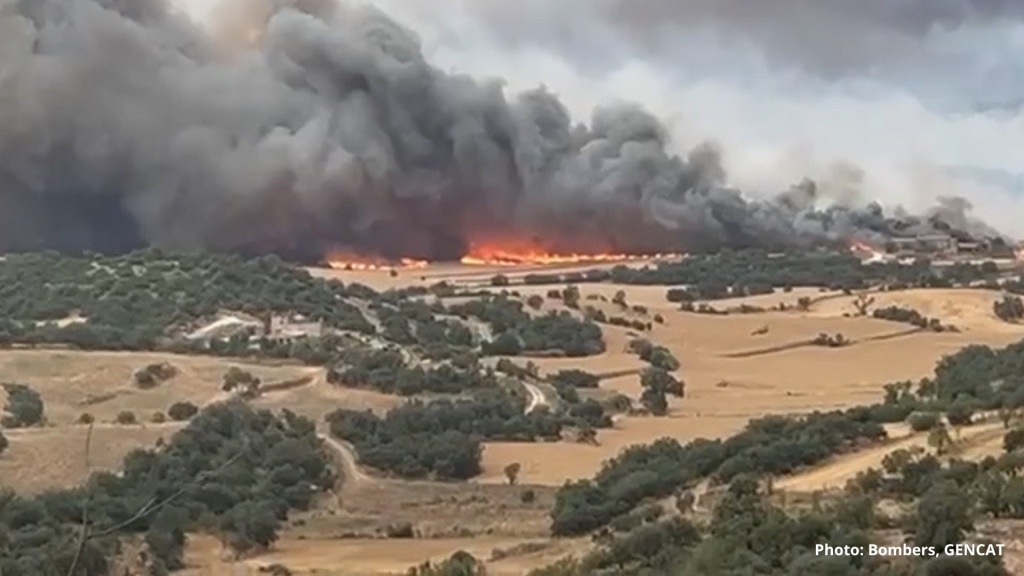
Fire has always been and will continue to be a natural disturbance of Mediterranean ecosystems. However, the fire regime is undergoing profound transformation, driven by climate change and shifts in land use. The widespread abandonment of traditional agricultural and livestock practices has increased landscape continuity and fuel accumulation, making them more susceptible to burning. As a result, we are witnessing a transition from frequent, low-intensity fires to less frequent but far more severe and destructive events, often escalating into Extreme Wildfire Events (EWEs).
In the past decade, wildfires across the Mediterranean are having an alarming impact. Notable examples include catastrophic fire seasons in Greece (2018, 2021, 2023), Turkey (2021), Spain (2022, 2024 and 2025), and Algeria (2021 and 2023), among others.
These fires have serious environmental consequences, but they also have heavy economic and social costs, since in many Mediterranean countries, forests play a key role in the livelihoods of rural communities. Moreover, wildfires become even more dangerous when they occur in the wildland-urban interface, where protecting lives and property becomes the top priority.
This critical situation is expected to become worse in the coming years, making preparedness indispensable. Effective fire management should be dealt with from multiple perspectives, including prevention, early detection, rapid response, post-fire restoration, and adaptation measures. Innovative solutions are needed to move towards an Integrated Fire Management model that can better address wildfires, recognising fire not only as a threat but also as a potential tool for creating resilient landscapes and communities.
COURSE OBJECTIVES
- Gain a clear understanding of the role of fire in ecosystems and its application as a management tool.
- Become familiar with diverse types of forest fire, including extreme wildfire events, and learn how to interpret fire behaviour.
- Examine the latest strategies for addressing forest fires within the framework of integrated fire management.
- Develop a general vision of forest fire management tools to enhance territorial preparedness and to create and maintain fire-resistant and resilient forest landscapes.
- Acquire key knowledge of the critical factors to consider when developing extinction strategies, including examples of the wildland urban interface.
- Be able to address forest policies relevant to the prevention and management of wildfires.
- Understand the potential of effective management strategies implemented in different countries with mediterranean climates.
- Acquire practical experience in the development of integrated fire management proposals in Mediterranean countries.
Course coordination



Registration
Applications must include a curriculum vitae and a copy of the supporting documents most related to the course subject.
The deadline for applications has been extended until February 6 2026.
Applications from candidates requiring authorisation to attend the course may be accepted provisionally.
Registration fees for the course amount to 500 euro for face- to-face participation and 350 euro for online attendance.
FAQs
Who should attend
The course is designed for 25 face-to-face participants and 30 online participants with a university degree. The course is aimed at professionals, researchers, and decision-makers involved in the prevention and management of wildfires and in the sustainable management of Mediterranean forest ecosystems. Candidates should ideally come from: Public administrations responsible for forestry, environment, civil protection, or rural development, fire and emergency services particularly those engaged in forest fire operations, planning, or risk assessment; Research and academic institutions working on fire ecology, forest management, climate change adaptation, or landscape resilience; international organisations, NGOs, and foundations; promoting integrated fire management, rural development, or ecosystem restoration; private sector entities (consultancies, forest management companies, or technology providers) developing solutions for early detection, monitoring, and prevention.
Guest lecturers
The programme will be delivered by well-qualified lecturers from universities, research centres, foundations, and emergency services across several Mediterranean and international institutions.
Course Format and Approach
The course will be held at CIHEAM Zaragoza over a period of 1 week, from 11 to 16 May 2026, in morning and afternoon sessions face-to-face and online, and will be delivered in English.
The course requires personal work and interaction among participants and with lecturers. The international characteristics of the course favour the exchange of experiences and points of view.
The programme has an applied approach. Lectures are complemented by applied examples, case studies and practical exercises.
Scholarships
Candidates from CIHEAM member countries (Albania, Algeria, Egypt, France, Greece, Italy, Lebanon, Malta, Morocco, Portugal, Spain, Tunisia and Türkiye) may apply for scholarships covering registration fees, and for scholarships covering the cost of travel and full board accommodation.
Candidates from other countries who require financial support should apply directly to national or international institutions.
All applications are subject to a selection process based on the profiles submitted.
Insurance
It is compulsory for participants attending the course in person to have medical insurance valid for Spain. Proof of insurance cover must be given at the beginning of the course. Those who so wish may participate in a collective insurance policy taken out by the Organisation, upon payment of the stipulated sum.