



- CIHEAM Zaragoza was part of the organising committee for the event, that brought together 360 specialists, researchers, and professionals from the livestock sector
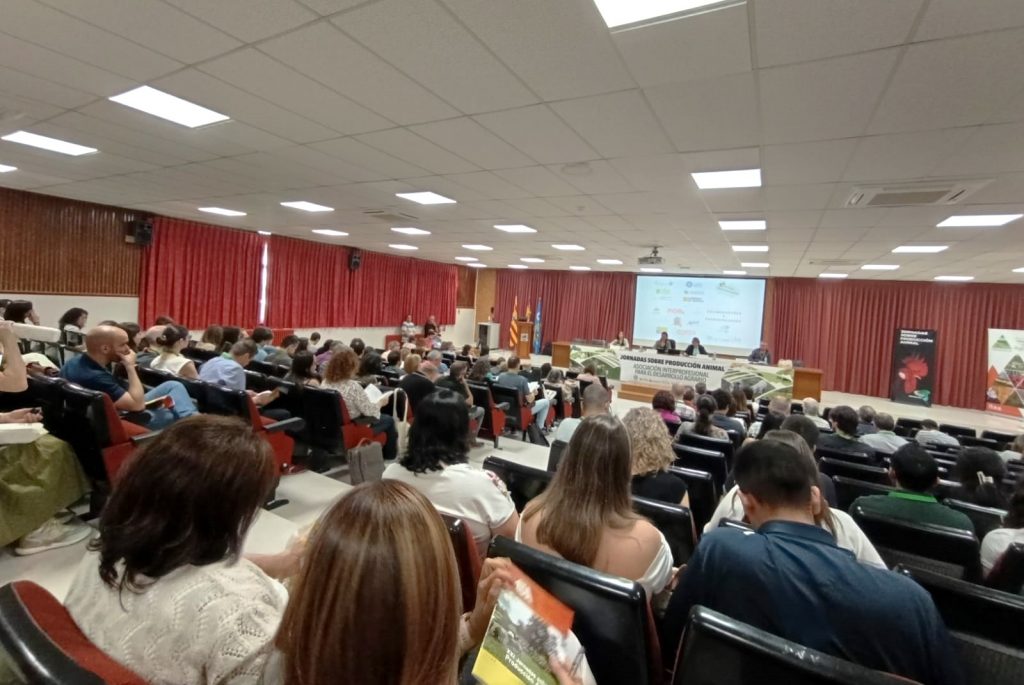
On 3 and 4 June 2025, the Interprofessional Association for Agricultural Development (AIDA) held the XXI Workshop on Animal Production, with a record-breaking number of participants with over 360 registrations. Among them were 88 early-career researchers competing for the Young Researchers Award. This year’s edition also saw the consolidation of the side event ‘Researchers’ Night’ which attracted over 160 attendees.
The workshop received a record number of contributions to the scientific programme, with 318 communications (268 oral presentations and 50 posters) for the 41 sessions organised in seven thematic sections: Genetics, Nutrition-Feeding, Precision Livestock Farming, Reproduction, Animal Health and Welfare, Product Quality, and Livestock Systems, and Economics and Management. The sessions were chaired by leading experts in education, industry, science and technology, from universities, research centres and businesses across Spain.
The work of the organisation teams of each section was coordinated by the workshop secretary, Luis Varona.
The organising committee was made up of researchers and practitioners from CITA-Aragon, the University of Zaragoza and CIHEAM Zaragoza.
Spotlight on Animal Welfare
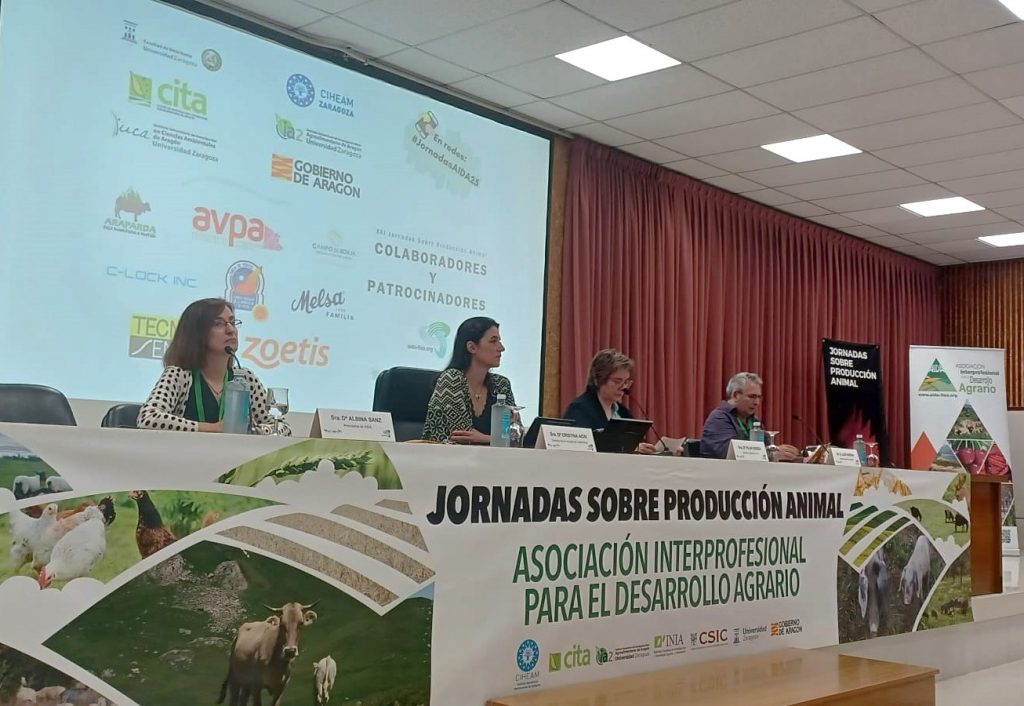
The opening session of the workshop was held onMonday 3 June presided by:
- Cristina Acín Tresaco, Dean of the Faculty of Veterinary Science of Zaragoza
- Pilar Errea Abad, Director of the Agri-food Research and Technology Centre of Aragon (CITA)
- Albina Sanz Pascua, President of AIDA
- Luis Varona Aguado, Secretary of the AIDA workshop
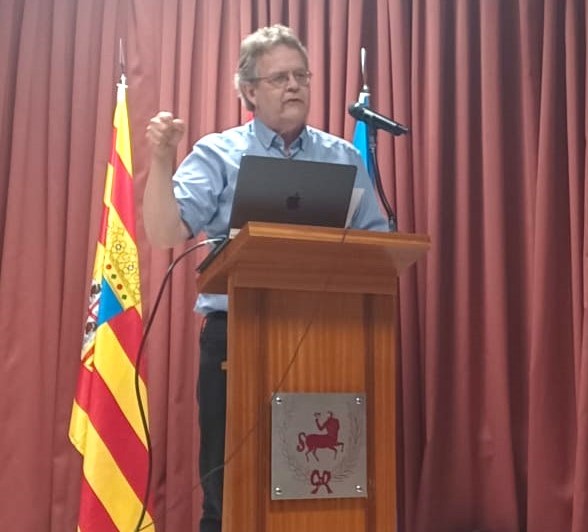
The keynote lecture, ‘Farm Animal Welfare in Times of Crisis and Uncertainty’, was delivered by Professor Peter Sandøe, from the University of Copenhagen. The lecture was followed by debate on the growing importance of animal welfare, an issue that intersects science, ethics, production and regulation.
As Luis Varona noted: ‘Animal welfare has become a strategic pillar in livestock production. Regulations are evolving constantly, with an impact on the products that reach the market. It is also a sensitive topic for consumers, who are demanding products that respect animal welfare. This directly affects production methods and livestock systems’.
The round table, organised by AIDA and the Union of Spanish Animal Science Organisations (UEECA), focused on animal welfare in intensive production systems such as pig, poultry and rabbit farming. Representatives from industry, production, research and animal protection organisations discussed the legal, scientific, productive and sociological perspectives of animal welfare, leading to several key takeaway messages: Ethical concerns often arise from inappropriate management rather than the system in itself; the sector needs a consensuated roadmap to help producers understand regulatory shifts and reduce uncertainty; solutions involve sector-wide integration to safeguard the welfare of animals and farmers and guarantee the economic viability of professional projects. Strategic recommendations were put forward to make animal welfare a core element and generate mutually beneficial scenarios. The panellists concluded that it is essential to address problems and seek solutions through integrated frameworks based on sustainability and the ‘One Welfare’ approach.
The Lighter Side of Science: Researchers’ Night
On the evening of 3 June the workshop offered a lighter programme at the Rock&Blues Café in Zaragoza for Researchers’ Night, where young scientists took to the stage with stand-up comedy acts. The evening also featured the short-film competition ‘Debunk a Fake’, an initiative from UEECA.
The informal atmosphere, light-hearted creativity, and interaction with the audience made this one of the most memorable events of the workshop.
Research Networks and Partnerships
The Red CIBA scientific network on animal welfare and the Research Network for Precision Livestock Farming and Digitalisation in Animal Production, took the opportunity to hold working meetings and consolidate opportunities for scientific and technical collaboration.
The event received institutional support from the Faculty of Veterinary Science of the University of Zaragoza, CITA, CIHEAM Zaragoza, IA2, IUCA and the Government of Aragon, and was sponsored by ARAPARDA, A.V.P.A., D.O. Campo de Borja, C-Lock Inc., D.O. Jamón de Teruel, Melsa, Tecnosens S.p.A.,and Zoetis España.