


- Bernardo Basurco, administrator of the training area 'Fisheries and Aquaculture' at CIHEAM Zaragoza, addresses in this article the current situation of a sector which, despite its growth, faces challenges such as the environment, competition, governance and the stagnation of European production, and where continuous innovation and sustainability efforts are considered vital for its future development.
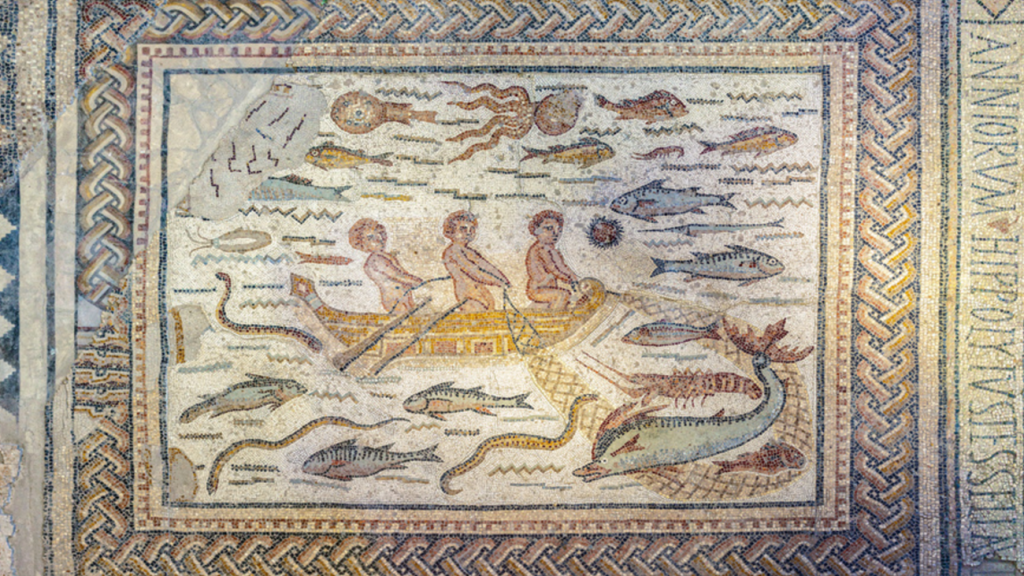
Aquaculture in the Mediterranean region is an activity that started many centuries ago. The earliest known accounts date back to ancient Egypt, when images on the tomb of Akhethetep (2500 BC) depict men taking tilapia out of a fish pond. The Greeks cultivated molluscan shellfish in the 5th century BC, and the Romans cultivated or simply kept seabass, seabream, mullets and oysters off the Italian coast in enclosed facilities. Nowadays, aquaculture is an important and increasing source of high-quality, digestible protein in most countries. In 2022, fisheries and aquaculture production reached an all-time high of 223.2 million tonnes, an estimated 20.7 kg of aquatic animal foods per capita. This constituted about 15 percent of the animal protein supply (FAO, 20241).
In 2022, global aquaculture production reached 130.9 million tonnes and today, more than half of the total world seafood supply comes from aquaculture (FAO, 2024). According to the FAO (FAO FishStat data, March 20242), aquaculture production in 21 Mediterranean and Black Sea countries3 belonging to the General Fisheries Commission for the Mediterranean (GFCM) has been expanding significantly over recent decades, multiplying the 2002 production volumes (1,277,659 tonnes) by 2.3 to reach a total production of 2,948,534 tonnes in 2022. However, most countries in the region have a large seafood supply deficit. In Spain alone, the seafood deficit reached €3.581 billion in 2022 (more than 1 billion more than in 2015), in fact, two out of every three seabream and one out of every two seabass consumed in Spain are imported (APROMAR 20244).
There have been important changes in the last two decades. While mollusc bivalves (mussels, Pacific cupped oyster, Japanese carpet shell, etc.) were the main group of species in 2002, accounting for 42.7% of production, twenty years later (2022) this hardly reached 15.6%. Freshwater fish such as Nile tilapia, cyprinids, and North African catfish, which represented 24.2% of production in 2002, twenty years later have taken the lead with 37.5%, followed closely by marine finfish (mullets, gilthead seabream, European seabass, meagre, Atlantic bluefin tuna, turbot, red porgy, etc.) reaching 36.8%. In 2022, diadromous fish (rainbow trout, sturgeon, European eel, etc.) accounted for 9.9%, and crustaceans (white leg shrimp) only 0.2% (Table 1).
Table 1. Aquaculture development in GFCM countries by species groups (ISSCAAP division)
| 1992 | 2002 | 2022 | growth 2022-24 | 1992 | 2002 | 2022 | |
| ISSCAAP division | tonnes | tonnes | tonnes | % | % | % | |
| Miscellaneous aquatic animals | - | - | 30 | ne | - | - | 0.0 |
| Crustaceans | 2,740 | 2,661 | 5,403 | 103 | 0.4 | 0.2 | 0.2 |
| Molluscs | 461,974 | 546,143 | 459,446 | -16 | 61.9 | 42.7 | 15.6 |
| Freshwater fish | 122,803 | 309,732 | 1,105,602 | 257 | 16.5 | 24.2 | 37.5 |
| Diadromous fish | 119,654 | 162,097 | 291,278 | 80 | 16.0 | 12.7 | 9.9 |
| Marine fish | 33,711 | 256,988 | 1,085,981 | 323 | 4.5 | 20.1 | 36.8 |
| Aquatic plants | 5,052 | 38 | 793 | ne | 0.7 | 0.0 | 0.0 |
| 745,934 | 1,277,659 | 2,948,534 | 131 | 100 | 100 | 100 |
ne: not estimated
With the exception of Libya, Syria, Israel, Italy and France, aquaculture production has grown in all Mediterranean and Black Sea countries in the same period. Concerning the production in the GFCM countries in this region, aquaculture production is dominated by Egypt (52.6%), followed by Türkiye (17.5%), Spain (9.36%), France (6.80%), Greece (4.82%) and Italy (4.50%). These six countries accounted for 95.59% of the total production in the region in 2022. Whilst in Egypt, production is based on semi-intensive and intensive freshwater production (tilapia and carp) and marine finfish species (mullet), in Türkiye the main species produced are trout, seabream and seabass, as well as other species at lower volumes (meagre and bluefin tuna). In Spain, France, and Italy, the production is more diversified and includes molluscs (mussels, oysters, and clams), and high-value carnivorous fish species (gilthead seabream, rainbow trout, European seabass, bluefin tuna, meagre, turbot, red porgy, sturgeon, European eel, and Senegalese sole). Other smaller Mediterranean countries, such as Croatia, Malta, Tunisia, have significant fish production volumes.
Most bivalves are cultured in European countries, with Spain, France and Italy accounting for 99% of production, both in the Atlantic and the Mediterranean. Bivalve production, although cultured in high volumes for more than 40 years, has undergone a 16% decrease in the last two decades. Freshwater and marine finfish have shown the highest development, Egypt and Türkiye being the biggest producers of these two species groups.
Table 2. Aquaculture development (volume: tonnes) in GFCM countries
| 2002 tonnes | 2022 tonnes | % volume | growth volume (times) | 2002 (USD 1000) | 2022 (USD 1000) | % value | growth value (times) | |
| North Africaa | 380.462 | 1,580,884 | 53.62 | 4.16 | 670,305 | 3,752,471 | 36.83 | 5.6 |
| Other Medb | 91.059 | 541,255 | 18.36 | 5.94 | 207,919 | 2,673,237 | 26.24 | 12.86 |
| EUc | 806.138 | 826,395 | 28.03 | 1.03 | 1,468,659 | 3,762,555 | 36.93 | 2.56 |
a: Algeria, Egypt, Libya, Morocco, and Tunisia
b: Albania, Israel, Lebanon, Montenegro, Syrian Arab Republic, Türkiye
c: Bulgaria, Croatia, Cyprus, France, Greece, Italy, Malta, Romania, Slovenia, and Spain
When looking at production value (USD 1000) the statistics show that even though in North African countries aquaculture represents more than half (53.62%) of what the region produces, in value it accounts for only 36.83 %. This is mainly because in Egypt (leading country), production is concentrated in non-carnivorous low-value species (Nile tilapia, cyprinids, and mullets), whereas in EU countries, the fish production, which in volume represents 28.03% and in value 36.93%, fish aquaculture production is concentrated in high-value carnivorous fish species (gilthead seabream, rainbow trout, European seabass, bluefin tuna, meagre, turbot, red porgy, sturgeon, European eel, Senegalese sole, etc.).
It is important to note that whereas aquaculture has grown about 5 times in the last two decades in North Africa and other Mediterranean countries, there has hardly been any growth (1.03) in European countries. This stagnation is partly due to the decrease in production of mollusc bivalves, as EU aquaculture production (excluding molluscs) has grown 1.44 times.
Unfortunately, there are no regional statistics available for the production of trout eggs and marine fish juveniles. MedAID H2020 project estimated that in 2016 about 64% of juveniles of gilthead seabream and European seabass were produced in EU countries versus 36% produced in non-EU countries. Similarly, a significant share of the aquafeed for seabass and seabream is produced by multinationals that tend to concentrate their production in a few countries and then distribute it to the whole region through commercial and distribution units (Aguilera et al., 20195).
Most GFCM countries are involved in this spectacular growth, which has developed as a result of significant research, mainly in the fields of reproduction, larval culture, nutrition, feed manufacturing, engineering, and IT technologies. The technology applied has evolved rapidly as a result of improvements made in existing farming facilities, for instance water recirculation for freshwater and marine land-based installations, and the development of off-shore cage farming. As a consequence of such developments, nowadays, in the Mediterranean and Black Sea countries, more species are cultured, and a variety of production activities coexist in different environments using a wide range of technologies: from extensive mollusc or semi-extensive freshwater fish production to highly intensive raceways, net cage fish farming, and recirculating aquaculture systems (RAS).
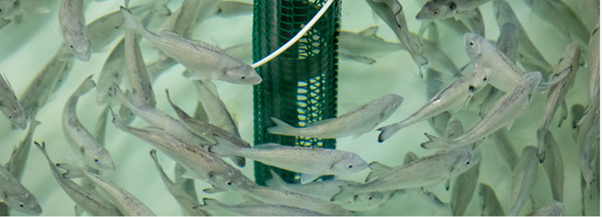
This technology development is transforming Mediterranean aquaculture, from extensive and labour-intensive facilities to intensive, mechanised, and more automated systems run by highly qualified staff. Even though there is a general trend towards larger firms and a higher degree of internationalisation and integration, companies also tend to specialise in different business models according to levels of production and product strategies (Aguilera et al., 20196).
As in other parts of the world, the aquaculture sector in the Mediterranean region faces a series of important constraints, some related to the evolution of the economy and market trends, others related to governance, such as site availability and licensing, planning, financing, infrastructures, and availability of highly specialised human resources, as well as more technical constraints such as the availability of sustainable inputs (raw material for feeds, or quality seeds and juveniles of main species and new species), health management, biosecurity, control of diseases, and fish welfare.
Mediterranean and Black Sea aquaculture can be divided into sub-sectors, all at various levels of development and facing different constraints. For instance, bivalve production is decreasing and faces strong competition from third countries as well as changes in consumption patterns; the trout sector is an ageing industry, and the seabass and seabream industry faces high international price competition and smaller margins. These sub-sectors all demand higher performance and management efficiency, productivity and economies of scale, a situation that is driving industry policy to scale up production and develop more efficient production systems, such as offshore aquaculture and recirculation aquaculture systems, and implement new technologies (IT and automation).
In addition, there are significant intangible constraints, such as the social acceptability of the sector by consumers, citizens, and public administrations, that raise environmental concerns about the location of farms and the impact of effluents on the surrounding environment; or competition with other users of the coastal areas for housing development, tourism, navigation, fishing, wildlife park projects, harbours, and maritime traffic. Concerns are also raised about animal welfare or excessive use of veterinary medicines7,8.
According to APROMAR (2024), European aquaculture companies are competitive businesses, but their market position is being severely compromised for several reasons. The most relevant issues are administrative, related to the need to comply with a number of regulations concerning occupation concessions, emissions, food safety, waste, taxes, fees, etc. These superfluous administrative burdens limit companies’ growth potential and reduce their competitiveness.
The importance of aquaculture has been recognised by the European Commission. In 2013, the Commission published their Strategic Guidelines for the Sustainable Development of EU Aquaculture (COM (2013) 229 final), and more recently designed the Strategic Guidelines for a more Sustainable and Competitive EU Aquaculture for the Period 2021 to 2030 (COM(2021) 236 final9). This strategy underlines the potential of farmed seafood as a source of protein for food and feed with a low-carbon footprint which has an important role to play in helping to build a sustainable food system. The strategy also aims at stimulating the economy and creating jobs while accelerating the green transition cost-effectively in order to reach the following inter-related objectives:
- building resilience and competitiveness;
- participating in the green transition;
- ensuring social acceptance and consumer information; and
- increasing knowledge and innovation.
The need to ensure sustainable development was already recognised in 1995 with the adoption of the FAO Code of Conduct for Responsible Fisheries (CCRF). Article 9 covers aquaculture. The GFCM has also published (FAO 2021) its 2030 Strategy for Sustainable Fisheries and Aquaculture in the Mediterranean and the Black Sea10, which recognises that aquaculture production needs to meet demand and grow sustainably, capitalising on innovation, digitalisation and knowledge sharing, and enhancing its appeal to investors. To fulfil its overarching sustainability vision, the GFCM 2030 Strategy for the Aquaculture Pillar is supported by four expected outputs:
- efficient governance promoted in support of responsible investment;
- practices supporting the sustainability of the aquaculture industry;
- improved perception of aquaculture; and
- maximised technology and information systems
References
[1] FAO. 2024. The State of World Fisheries and Aquaculture 2024 – Blue Transformation in Action. Rome. https://doi.org/10.4060/cd0683en
[2] FAO. 2024. FishStat: Global aquaculture production 1950-2022. [Accessed on 29 March 2024]. In: FishStatJ. Available at www.fao.org/fishery/en/statistics/software/fishstatj. Licence: CC-BY-4.0.
[3] Albania, Algeria, Bulgaria, Croatia, Cyprus, Egypt, France, Greece, Israel, Italy, Lebanon, Libya, Malta, Montenegro, Morocco, Romania, Slovenia, Spain, Syrian Arab Republic, Tunisia and Türkiye.
[4] APROMAR 2024. La acuicultura en España 2023. https://apromar.es/informes/
[5] Aguilera, C., Furones, D., Reverté, C., Sanjuan-Vilaplana, C. A., Basurco, B., López-Francos, A., Llorente, I., & Ramos, S. (2019). Integrated Holistic Assessment of Mediterranean Aquaculture. Horizon 2020 project MedAID, Deliverable 1.3. http://www.medaid-h2020.eu/index.php/deliverables/
[6] Aguilera, C., Furones, D., Reverté, C., Sanjuan-Vilaplana, C. A., Basurco, B., López-Francos, A., Llorente, I., & Ramos, S. (2019). Integrated Holistic Assessment of Mediterranean Aquaculture. Horizon 2020 project MedAID, Deliverable 1.3. http://www.medaid-h2020.eu/index.php/deliverables/
[7]https://www.eldiario.es/canariasahora/ciencia_y_medio_ambiente/granja-pulpos-canarias-continua-evaluacion-ambiental-hallarse-posibles-efectos-adversos-significativos_1_11323860.html
[8]https://www.europapress.es/castilla-y-leon/noticia-empresas-acuicultura-acusan-oba-difundir-informacion-falsa-sesgada-obsoleta-sector-20240606143551.html
[9] Communication from the Commission to the European Parliament, the Council, the European Economic and Social Committee and the Committee of the Regions. Strategic guidelines for a more sustainable and competitive EU aquaculture for the period 2021 to 2030. COM/2021/236 final. https://eur-lex.europa.eu/legal-content/EN/TXT/HTML/?uri=CELEX:52021DC0236
[10] FAO. 2021. GFCM 2030 Strategy for sustainable fisheries and aquaculture in the Mediterranean and the Black Sea. Rome. https://doi.org/10.4060/cb7562en