



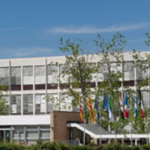
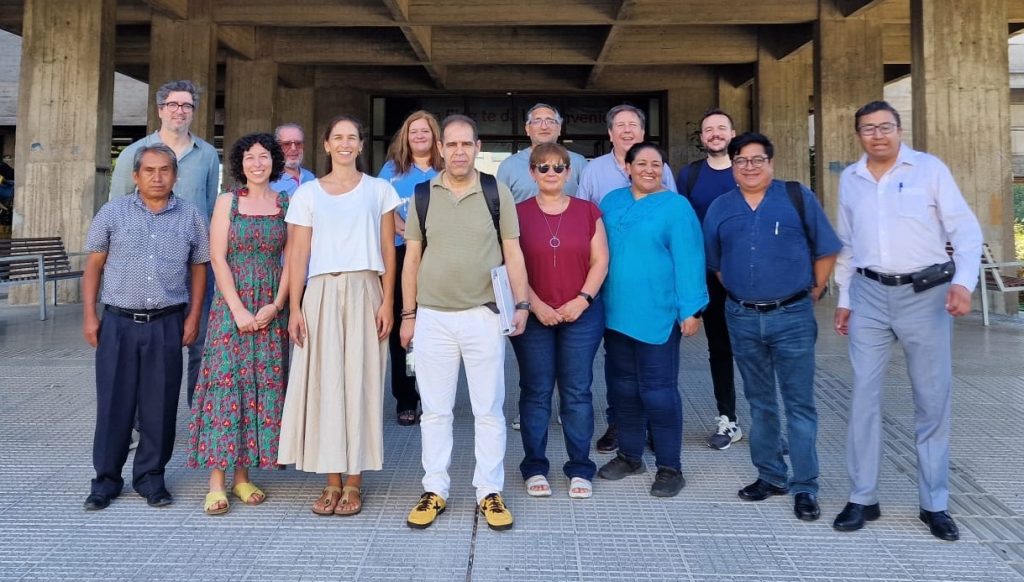
From 3 to 6 February 2026, the Erasmus+ EduSAF project (Education for the Transition to Sustainable Agrifood Systems in South America) held its third consortium meeting at the Faculty of Engineering of the University of the Republic in Montevideo, Uruguay.
The gathering brought together project partners to review progress made since the previous meeting in Cochabamba, Bolivia. The sessions focused on analysing the status of technical, administrative, and financial execution, as well as planning key milestones for the remainder of the year. CIHEAM Zaragoza, the project coordinator, was represented by Ramzi Belkhoja, who chaired the plenary sessions.
During the meeting, partners highlighted the progress achieved across various work streams and stressed the importance of maintaining effective coordination to ensure project objectives are met. Discussions also covered quality assurance, visibility, and the long-term sustainability of the results.
Technical Work and Academic Cooperation
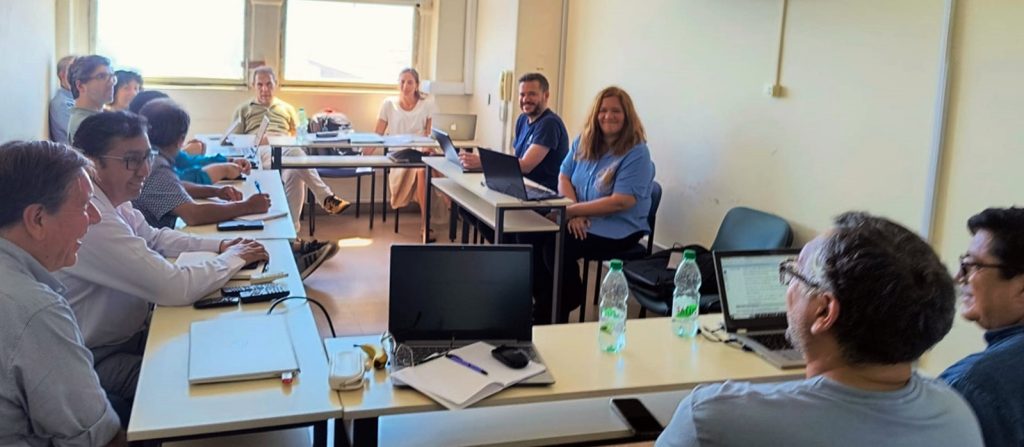
The sessions on 4 and 5 February were dedicated to working groups between the Latin American partner universities [University of the Republic (Uruguay), National University of the South (Argentina), National University of Cuyo (Argentina), Higher University of San Simón (Bolivia), and Technical University of Oruro (Bolivia)]. These sessions focused on Work Package 4 (review and adaptation of curricula) and Work Package 5 (fostering interaction with businesses, government, and NGOs).
These workshops enabled further progress in modernising training programmes, ensuring they align with the current needs of the agri-food sector. Furthermore, the importance of strengthening collaboration with external stakeholders and integrating interdisciplinary approaches—contributing to more applied and territory-oriented education—was emphasised.
Training in Emerging Technologies
In tandem with the consortium meeting, and throughout the week of 2–6 February, the second training course took place: "Industry 4.0 and Agriculture 5.0 Technologies applied to Agri-food Systems". This intensive teacher-training programme was held at the same venue.
The programme combined theoretical and practical sessions on advanced sensor technologies, the Internet of Things (IoT), chemometrics, Deep Learning, and sustainability assessment through Life Cycle Analysis (LCA). CIHEAM Zaragoza contributed directly with sessions on IoT in agri-food systems and a case study on Artificial Intelligence applied to agriculture in the Global South.
The week concluded with a round table focused on digital technologies, transdisciplinarity, and knowledge systems in agri-food education, fostering a productive exchange of perspectives among participants.
This training activity provided an opportunity to bolster teaching capacities and encourage the incorporation of innovative tools into teaching-learning processes, while consolidating academic collaboration networks between Europe and South America.
About the EduSAF Project
EduSAF, funded by the Erasmus+ programme (grant agreement 101179751), aims to strengthen university education in sustainable agri-food systems in South America. The project promotes curricular updates, the development of key competences, and the integration of sustainability as a cross-cutting theme in higher education.